On The Beach

by Neville Shute

This should have been posted weeks ago

April 21, 2025

On The Beach by Neville Shute – an early dystopian speculative novel – came out in 1957. It sold over 100,000 copies in the first six weeks of publication and went on to sell 4 million copies. Within two years it came out as a movie with an ensemble cast of Hollywood A-listers. It’s a good enough book. In 68 years of critical and popular scrutiny, the reviews are decidedly mixed. But timing is everything. The launching of Sputnik in 1957 that year stoked Cold War paranoia into a frenzy. Senator Joseph Mcarthy’s career as a communist hunter may have collapsed but the hysterical terror of communism that he exploited had not. The prospect of a nuclear war was personal and a part of every day life. 

The characters in On The Beach are in the other hemisphere – that is, in Melbourne, Australia; the Northern hemisphere has been wiped out by the massive nuclear exchange of World War III. It is known that much of the population in the north is dead from attacks on the cities and that everybody else is dying from radiation and fallout poisoning. The poisonous cloud of radioactive fallout is being tracked and it is only a matter of time till the cloud reaches far south and finishes off the rest of the world. A premise of the story is that death and extinction are unavoidable. The science is dated. Many observers were incredulous about the behavior of the characters or the presumed response by government.

Neville Shute was an engineer, a journalist and a moderately successful novelist by the time he published On The Beach. He had seen the front lines of World War II and was well-versed in the Cold War politics that engendered terrifying prospects of a nuclear war. Communism was accepted in the West as a legitimate threat (not to say it wasn’t) and Shute responded to the visceral elements of menace and paranoia on everybody’s mind.

In two years On The Beach, A Canticle for Liebowitz, and Alas, Babylon were published – all with the theme of end-times or at least, post-apocalyptic times. This was a departure from prominent prior examples of dystopian fiction. 1984, published in 1949, is about the final evolution of a hyper-totalitarian society. Day of the Triffids published in 1951, deals with giant carnivorous plants capable of locomotion.

But the theme or the fear of nuclear war has legs. It makes a comeback in the 1980s when fear of the Soviets and fear of a nuclear confrontation reach another fever pitch. It has not subsided well into the 21st century.

Should you read On The Beach? If you are a student of the genre as a whole, yes, you should absolutely read On The Beach. If you are a wide-ranging reader looking for the next great choice, then as usual, you won’t know why you should or shouldn’t have read it until after you are done.
A Canticle for Liebowitz

By Walter Miller Jr.

Apparently, A Canticle for Liebowitz, published in 1959, “stands for many readers as the best novel ever written in the genre”. This is not atypical of the accolades applied to Walter Miller Jr’s novel by the most prestigious critics and publications in the industry, e.g. The New York Times Book Review and the Chicago Tribune Review of Books. Not all critics were so energized. But it’s hard to argue with a Hugo Award for Best Fiction if you’re looking for evidence of literary stature. Personally, I couldn’t read it – I tried a number of times. I still haven’t figured out exactly why it didn’t engage me but that’s neither here nor there. We have to report it as a foundational pillar of the genre.

The Wikipedia plot summary is extremely helpful. It reveals a rich imagination and 2000 years of post-apocalyptic history. A lethal social movement of anti-intellectualism lashes out at the technology and civilization that brought on the nuclear war that snuffed out the lives of so many. Books are burned. Libraries, laboratories and universities are laid waste. Anyone who can read is killed. Civilization evaporates and 10,000 years of culture and knowledge flickers out. A Dark Age ensues.

Miller’s brilliant plot superstructure relies on the monastic tradition of the Catholic Church. The story opens 600 years after the martyrdom of St. Liebowitz. He was a Jewish electrical engineer working for the military during the apocalyptic war known as the “Flame Deluge.” After the war he hoarded and hid books and any form of knowledge from sure destruction at the hands of the rampaging mobs – the self-named “Simpletons.” Liebowitz found refuge in a Cistercian monastery in a remote corner of the New Mexico desert, not far from where he had worked. In time, he joined the monastery, took his vows and became a monk. He got permission to found an order to protect and preserve the shreds and vestiges of the old knowledge that he had collected since the Deluge.

Literary analysts have revealed at least two prominent themes explored by Miller. He has a theory of cyclic history or recurrence. In 2000 years after the Flame Deluge, society progresses from destruction, through dark age and renaissance a few times. Technologically – in one iteration – the reborn civilization surpasses the 20th century. And consistent with the monastic framework, the story is peopled with monks, pilgrims, wanderers, abbots, friars and popes – always focused on the Albertian Order (Liebowitz’ legacy) and its calling to preserve the old knowledge. Another theme is that of the dialogue between church and state or – alternatively – “the conflicts between the scientist’s search for truth and the state’s power”.

As a tail gunner and radio operator in a B-25 bomber in World War II, Miller participated in the spectacular violence and destruction of the bombing of the Benedictine monastery at Monte Cassino. The savagery of that event, and probably its symbolism and ethical ambiguity, marked Miller for the rest of his life. He had frequent bouts of depression. One observer said that he had PTSD for thirty years before they had a name for it. Nonetheless he was a successful author, writing short stories for magazines, and he was a scriptwriter for a TV show. ‘Canticle’ was actually Miller’s second Hugo Award. The first was for The Darstfeller in 1955.

Miller’s experiences during World War II are imprinted throughout A Canticle for Liebowitz. Miller was an engineer in the army before he flew bombing missions over Italy. He reflected on the Monte Cassino bombing as a stand-in for the destruction of civilization and civil society. He converted to Catholicism; faith and its dialect with scientific advancement are an undercurrent of Canticle.

Depression and ‘writer’s block’ overtook Miller after the publication of Canticle. He became a recluse. He had married Anna Louise Becker in 1945 and he divorced and remarried her in 1953. Anna’s health declined and she died in 1995. William Miller Jr. died of a self-inflicted gunshot wound five months later.

Alas, Babylon

by Pat Frank

April 14, 2025

Alas, Babylon, by Pat Frank, is a dystopian science fiction novel. Perhaps it belongs in its own sub-genre of Cold War speculative fiction; the signature theme is the question, what is the aftermath of a nuclear war? Three primary examples are On the Beach, Alas, Babylon and A Canticle for Liebowitz, published in 1957 and 1959. There was a surge of new entries published in 1980 that mirrored a resurgence of Cold War fears in that political climate.

            These earlier novels are uncluttered by threats of EMPs or nuclear winter. Such constructs  were not yet fully developed by 1959. There is, however, widespread destruction at multiple bomb sites throughout the country plus conferred pariah status if you happen to live in a “contaminated zone.” Telecommunication is skeletal, spotty and unreliable. Re-supply of basic necessities from the outside is non-existent. The social fabric shrinks to the size of your neighborhood. Outsiders are suspect and reasonably so. Local defense and search for alternative food sources become primary long-term concerns.

            Pat Frank was an experienced journalist and active observer of the political and military context of the Cold War. In Alas, Babylon he devotes considerable storytelling to developing the military and geo-political scenario that unravels so dramatically into a nuclear exchange. This political-thriller prologue deftly undergirds the atmosphere of dread and panic that ensues.

            Frank introduces some amusing ironies. The government leans on nuclear energy to try and restore power to the population. The US receives aid of food, fuel and medicine aid from ‘third world’ countries such as Thailand, Indonesia and Venezuela. “Three Greats,” India, China and Japan have replaced the US and the Soviet Union as the pre-eminent powers in the world.

            The rest of the story is taken up with character development and the challenges of rebuilding a sustainable way  of life. There is misery, privation and death. But rising from necessity, we see ordinary people finding ways to survive, with more or less success, by cooperating with each other. Far from being a dirge of doom and gloom, Alas, Babylon closes on a rising mood of hope and optimism.

The Road

Dystopian science fiction by Cormac McCarthy

Cormac McCarthy wrote The Road for which he received a Pulitzer Prize in 2007. McCarthy died in 2023 at 89. The Road is a post-apocalyptic novel and only incidentally has become the pre-eminent example of dystopian science fiction in recent years. McCarthy’s applied his inimitable style to gothic Western stories and dark journeys into the psychology of violence or perhaps of madness.

The Road is a love story about a man and his son seeking hoped-for sanctuary from the effects of a global extinction event. The author has left enough clues that the world is in the tightening grasp of a lethal nuclear winter that has killed plant and animal life and most of the population. The horrors they experience are unspeakable but predictable. The Road is speculative because nuclear winter is a hypothetical construct; we’ve never experienced it. But the speculative leap is plausible enough. We know the power and effects of nuclear weapons, and nuclear winter – as a result of a full-on nuclear exchange – is a reasonable hypothesis from what we know.

            So, then, the unrelenting, dark and brutal journey depicted in The Road is a natural and predictable setting, dire and unspeakable as it is. McCarthy, by his style and treatment, has raised the bar of speculative fiction. His storytelling is austere and powerful. McCarthy’s message, ironically, is about love and the importance of relationships.

Call to artists

April 6 2025

Call for submissions  4/3/2025

This is a call for submissions of poetry and alternative fiction i.e. sci fi/speculative/dystopian fiction or fantasy. Just to put it out there; I have no budget and no staff. I can’t pay you for your art. Hopefully you will find a reason to participate when you hear the full offer.

Event Horizon is a new iteration of an old publication. Event Horizon Magazine is/will be a triannual journal of poetry and fiction. The next edition will be published when enough accepted works have been accumulated for an edition of about 50 pages.

Please submit one or two poems. Only one may be accepted and published.

Please submit your fiction story. As stated, the expected submission will conform to science fiction, speculative, dystopian or fantasy fiction genres. Your story should be within a minimum of 9000 words and a maximum of 15000 words. I am the editor/publisher; I will choose the works – not surprisingly – according to my own sense of quality and suitability. My expectation is that the journal will present offerings of the highest literary quality.

The journal when published will be available as a free pdf download and as a print-on-demand magazine.

I will promote the journal. I’m building a web presence for Event Horizon with a blog and posts to Facebook, Instagram and potentially other platforms. I’ll ask you if I can make Instagram videos of me reading your work or posting excerpts to Facebook. There will be residual promotion and exposure from the promotion of my book as well. The only return I can promise you is eyeballs on the journal and eyeballs and dollars on any print-on-demand sales you can generate. What it will cost you is your time, and your dedication to promoting your art. There will be no fees to pay. The rights to your work remain 100% yours.

Reading posted to Instagram and facebook -friends playing cards

Instagram and facebook encourage brevity – not my natural inclination. If you’re interested, this is the narrative just before the start of the reading:

Two friends, waiting for treatment at LCI

“Pinochle, right? Great game.”

“I know, it’s great.” Yitzhak – Itzo, to his friend – agreed.

“Where’d ja learn it?” Darwin was wearing pajamas and a robe.

“Handed down three generations. Three? Yeah, think so. Three. Back in the day, my great grandparents immigrated from Belarus – like from around Minsk. We’re Jewish, ya know. They wanted to get away from the pogroms, back before the Tsar and his family were offed by the commies.”

“Whoa, Itzo! Very heavy backstory.”

“Yeah. No shit. Great game though, right?”

Between the two of them, the two retired card players – patients at LCI – they controlled about fifty billion in assets. Their conversation was sprinkled with the arcane declarations and challenges that were a part of the game of pinochle.

Yitzhak Shapiro continued,

“When I was about seven, we would visit my grandparents in Brooklyn. And I remember when they were peering over their cards at each other – they were wound up like gunslingers. And one of them, called out to the other ‘Ah, I’ll spit in your eye’. I know context is everything but that’s all I can remember.”

“Awesome, Itzo. That’s a tender memory. Family time is the best.”

Yitzhak was dressed very casually in sweatpants and a knit shirt. The two of them were in a mixed-use space and Darwin Howe was waiting to be seen for an appointment. The long corridor of the wing was carpeted and expensively furnished on one side and the other side had a hard-surfaced utilitarian floor for heavy, wheeled medical equipment, gurneys and staff foot traffic. They were in large overstuffed chairs and using a coffee table that was too low for a card game.

Shapiro was with his family. His wife, Rebecca, and his daughter, Mary Louise were just out of hearing range, sitting together on a large overstuffed couch. Mary Louise considered the card players and inquired:

“So mom, I understand the mission – family love and support – and I am totally down with that. But I forgot the special word … why are we here?”

“Mitigation.”

“Yeah. Mitigation. And I know that if we are here, at LCI, for ‘mitigation’, it’s because, medically, LCI can do stuff that’s not covered by insurance, that’s totally experimental, and maybe barely legal. So it’s kind of a hail Mary pass – especially if you’re rich. That’s what I read, anyhow.”

“Well .. they won’t be hiring you to do their public relations but that’s pretty close to the mark.”

“Mom. Who’s the old dude that Dad’s playing cards with?”

resuscitation

I’m bringing an old friend back to life. I’m not sure yet what Event Horizon will become but at the moment, it is a platform to tell people about my book, A Bad Haiku. Here is the “short description” I posted to IngramSpark: “A Bad Haiku is a dystopian science fiction novel that places people in an imminent future that imaginable from present circumstances: natural disasters, global warming, rising seas, health threats, poisoned air and water, nuclear war, more.” And here is a link to my ‘author website’: lanningrussell.com

Issue 10 – gestation period unknown

So I’ve temporarily and reluctantly shelved one hobby to immerse myself in another.  I am going through the checklist of registering Event Horizon as a non-profit. From the oracle of the prophet, St Google, all paths are revealed. I just have to take each of the 10,000 steps. This may be a way of funding a staff and receiving the sacrement of Sustainability.

Don’t need much:  two people working from home about 10-20 hours each a month.  I need someone to do layout and someone to do marketing. When I get funded I’ll start reading resumes and scheduling interviews.

The layout I do is with MS Publisher, probably v. #2006 or earlier.  It’s installed permanently and it’s free.  If you use Adobe Illustrator, well, God bless you. Hope you like poetry.

Marketing means selling ads, taking issues to book stores for display, developing a “meaningful value proposition” for offering subscriptions, social media – posting and strategy, and a whole bunch of other stuff that I can’t remember right now.

Stay posted.  Big doings.

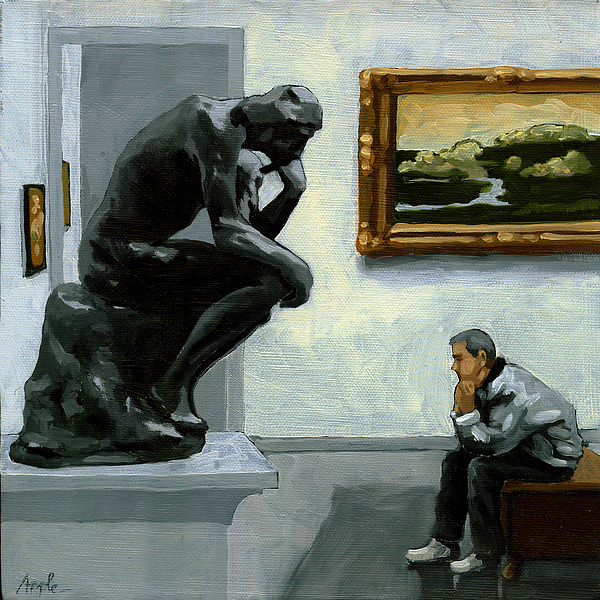
a-lot-to-think-about--oil-painting-linda-apple
A Lot to Think About  by  Linda Apple


Issue 9 – for download or purchase

Issue 9 is now available from the Home page for free download or for print-copy pyrchase.  Thanks to my contributors for the error reports. There was a lot to tweak.

FYI, although I have suspended publication for now, I will go through the motions of incorporating Event Horizon as a non-profit. I hope some day to be able to pay a small staff.  I’ve done non-profits before.  It’s a long road to acquire the coveted 501c3 designation.

Thanks for your support.  Follow this blog for updates.I-9 covers for blog